1.6.1Simple and Compound Meter
In Chapter 3, we established the basics: beats, tempo, meter, and the notation system that captures them on the page. We learned that 4/4 - four quarter-note beats per measure - is the overwhelming default of popular music, and we learned the backbeat that gives it its swagger. But music does not always divide time the same way, and this chapter is where the landscape opens up.
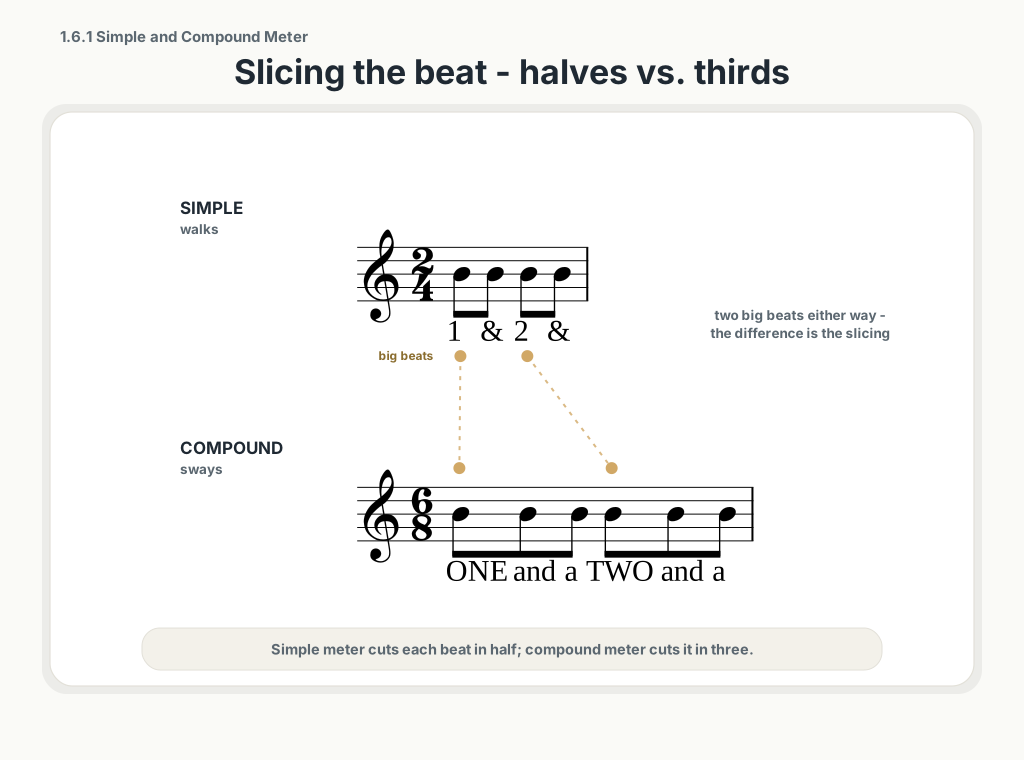
The meter we learned in Chapter 3 is simple meter. In simple meter, each beat divides naturally into two equal halves. A quarter-note beat splits into two eighth notes. A half-note beat splits into two quarter notes. The subdivision is binary - two, always two. This binary feel is clean, efficient, and driving. It is the rhythmic engine of rock, pop, punk, and most electronic dance music.
But there is another way to divide a beat, and it changes the feel of the music profoundly.
Simple meter walks. Compound meter rocks, lilts, and rolls; the roundness of its three-part subdivision gives the music a completely different physical sensation.
You know this feel already. It is the slow, swaying groove of Etta James’s “I’d Rather Go Blind.” It is the lilt of an Irish jig, the sway of a sea shanty, the underlying pulse of many gospel songs and doo-wop ballads. It is also hiding inside the 12/8 blues shuffle - four big beats, each divided into three - which is the rhythmic foundation of an enormous tradition reaching from Muddy Waters through Led Zeppelin to the Black Keys.
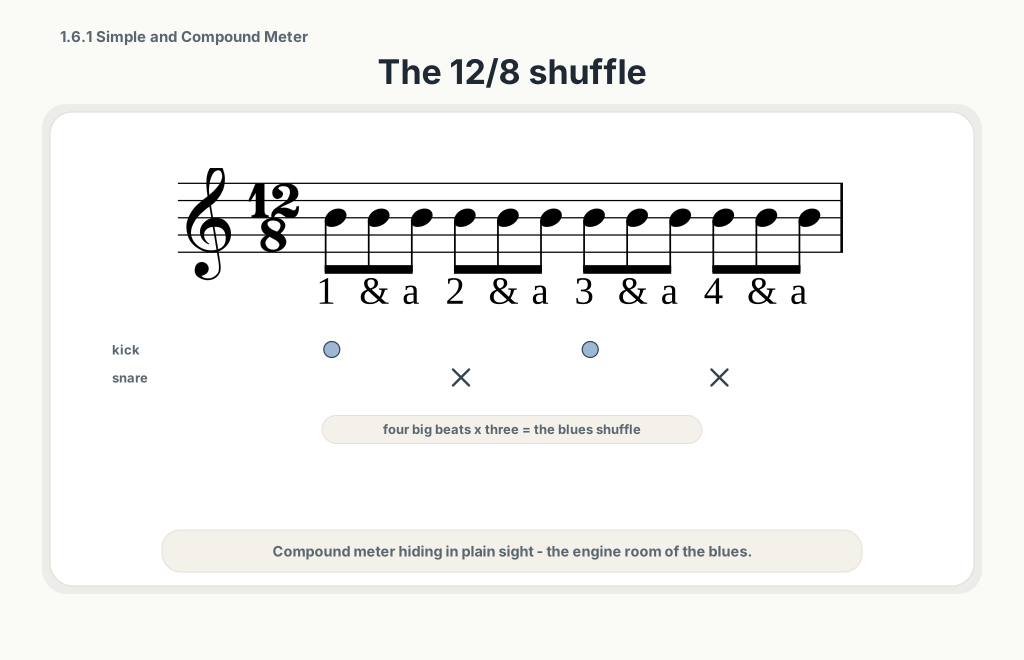
The conceptual leap here is important: the time signature is not just telling you how many beats are in a measure. It is telling you how time is sliced. Simple meter slices it in halves. Compound meter slices it in thirds. And that difference - halves versus thirds - ripples outward into everything: the way melodies feel, the way grooves interlock, the way your body responds. A composer choosing between 4/4 and 6/8 is not just choosing a number. They are choosing a physics.
1.6.2Syncopation and Subdivision
Meter creates a grid. It tells you where the strong beats fall, where the weak beats live, where each measure begins and ends. It is a framework of expectation - a contract between the music and the listener about where gravity lives.
Syncopation is the art of leaning against that gravity.
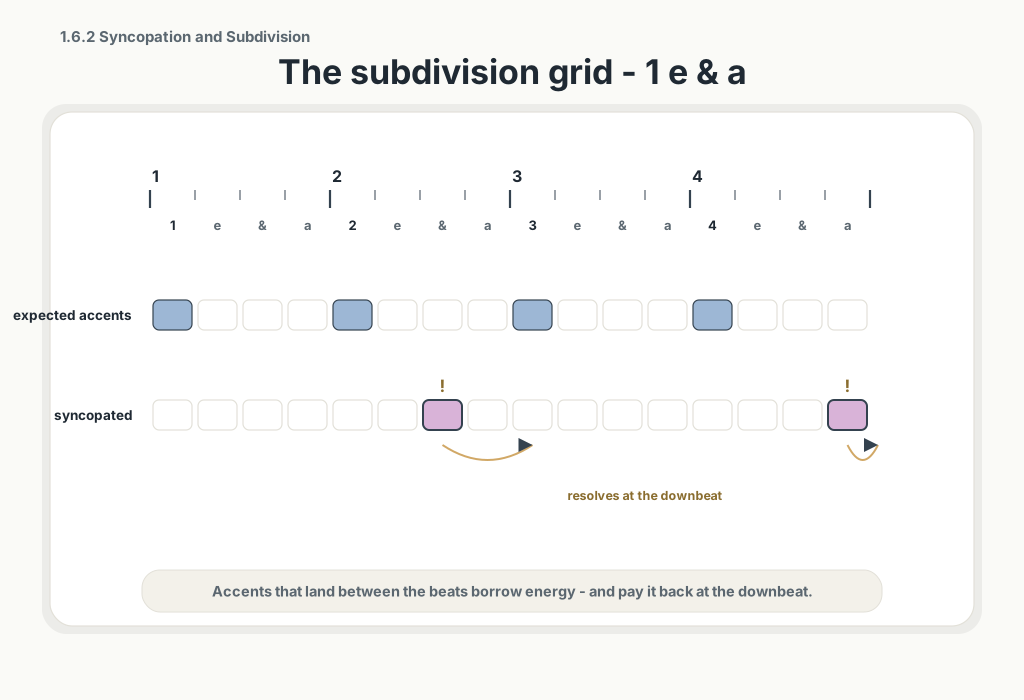
When emphasis, attack, sustain, or grouping shifts weight onto a weak beat or subdivision, it plays against the expected metric pattern. That displacement can resolve onto a strong beat, continue across the bar line, or become the stable identity of a groove. Syncopation can behave like rhythmic tension, but it need not accumulate or resolve like a dissonant chord.
Syncopation depends on subdivision - the finer grid of notes running beneath the beat. If the beat is a quarter note, then the eighth-note subdivision gives you the offbeats (the “ands”), and the sixteenth-note subdivision gives you the “e’s” and “a’s” - the tiny crevices between beats where funk and hip-hop and Afrobeat place their most devastating accents. Clyde Stubblefield, James Brown’s drummer on Funky Drummer, was a master of this: his grooves lived in the sixteenth-note grid, placing kick and snare hits in the spaces between the obvious beats, creating patterns that are mathematically precise and physically irresistible. You do not need to count the subdivisions to feel them. Your body does the math.
1.6.3Swing Feel
There is a third way to divide a beat - not evenly into two (simple), not evenly into three (compound), but unevenly, with a long-short lilt that sits somewhere between them.
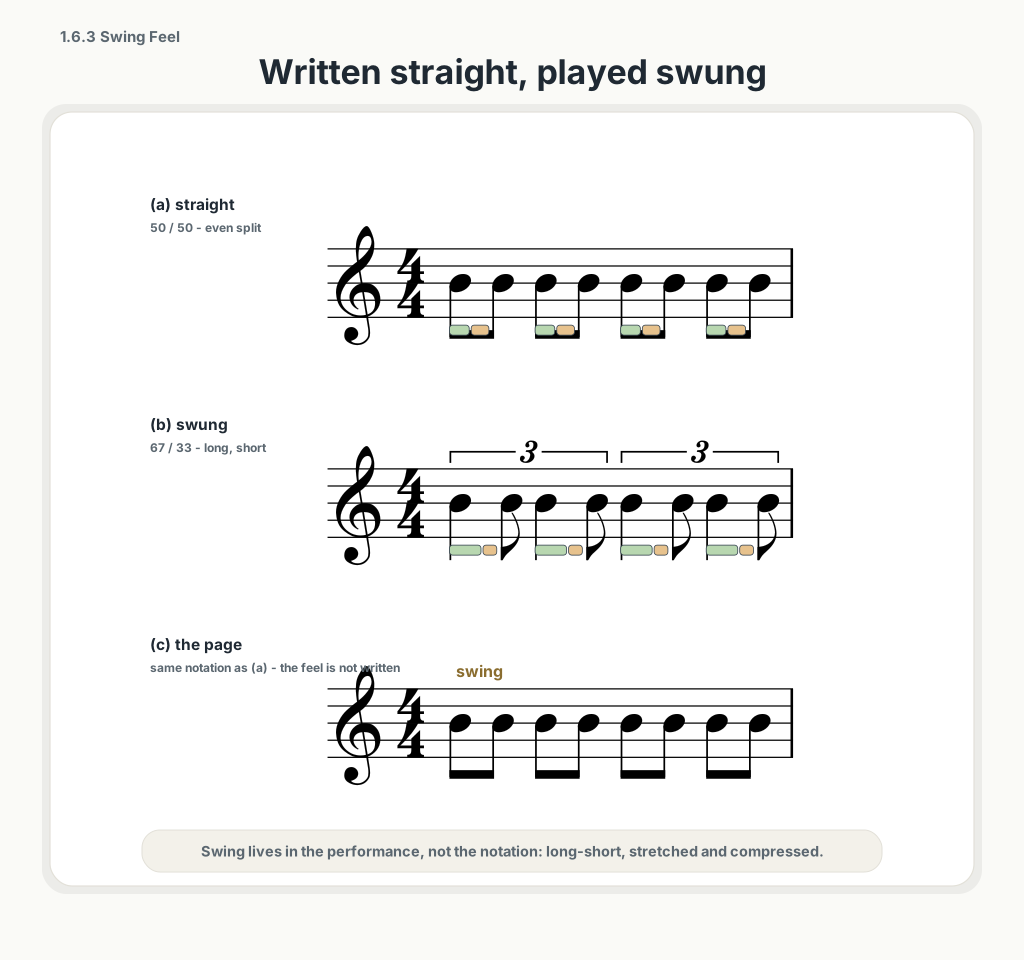
This is swing. In swing feel, a pair of eighth notes is not played as two equal durations. The first note is stretched, the second is compressed - long-short, long-short - creating a loping, rolling feel that is the rhythmic signature of jazz, blues, early rock and roll, and a surprisingly large amount of contemporary music.
Swing is sometimes described as a triplet feel - the first eighth note lasting roughly two-thirds of the beat and the second lasting one-third - but that description, while useful, is an approximation. Real swing is not a mathematical ratio. It is a feel, and it varies from player to player, from genre to genre, even from bar to bar within a single performance. A classic jazz ride cymbal swings heavily and openly. A shuffle blues swings with a hard, driving bounce. J Dilla’s groundbreaking hip-hop production developed a distinctive approach to programmed micro-timing - placing notes slightly ahead of or behind the grid in ways that are neither straight nor swung but something else entirely, a rhythmic rubato that makes the groove feel alive, elastic, breathing.
Notation handles swing imperfectly. Two eighth notes on the page look the same whether they are to be played straight or swung; the performer must know from the style, the tempo, the genre, or the written instruction “swing” at the top of the chart. This is another moment - like timbre in Chapter 2, like the blue note in Chapter 4 - where the notation points toward the music but cannot fully contain it. The music lives in the body’s relationship to the grid, and that relationship resists being pinned to the page.
1.6.4Latin Grooves and Clave
The strong/weak metric grid remains active in Afro-Cuban son and much salsa, but clave adds another organizing layer: an asymmetrical timeline around which interlocking parts orient. It is one influential principle within the much wider rhythmic diversity of Latin American, Caribbean, and African popular musics.
The clave (from the Spanish clave, meaning “key” or “code”) is a rhythmic pattern, usually two measures long, that serves as the organizational backbone of many Afro-Cuban genres and the salsa traditions that draw from them. It is not a time signature or a simple strong-weak alternation: it is a pattern of attacks spread asymmetrically across two bars, around which other ensemble parts orient.
The three-side contains three attacks and the two-side two; reversing their order changes how the surrounding parts interlock, not an inherent balance of “restless” versus “grounded.”
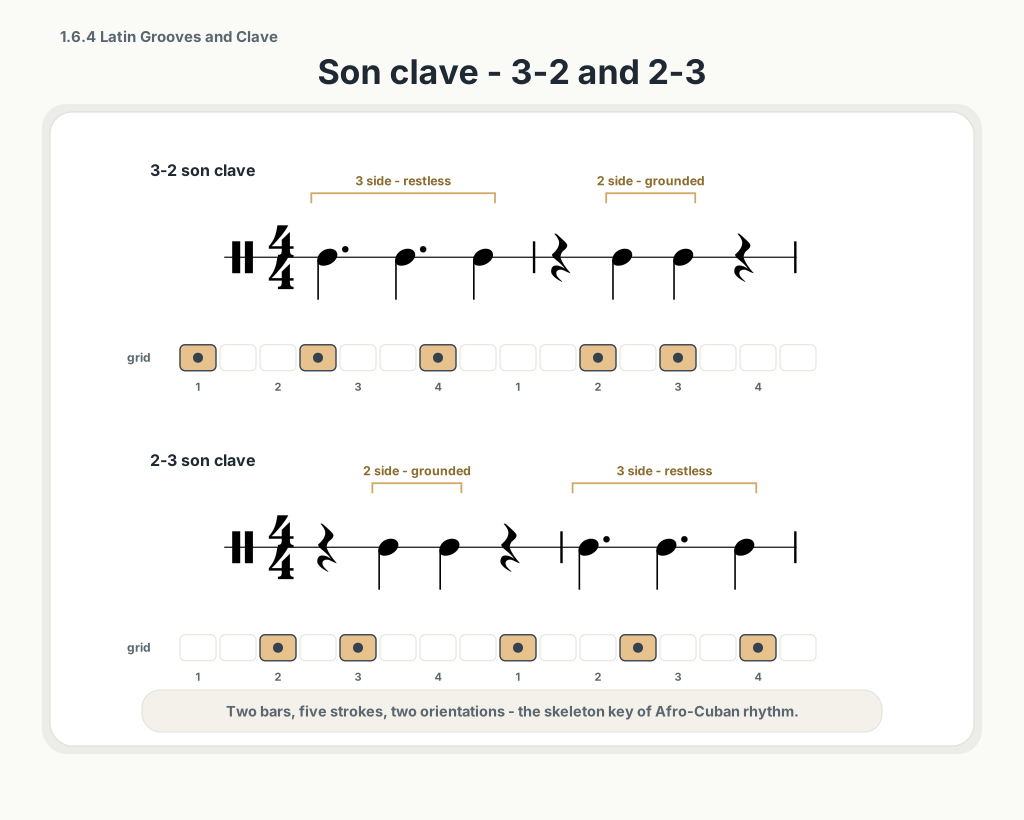
The clave is never optional. In a salsa ensemble, every musician - from the pianist to the bass player to the singer - must know where the clave is and play in relationship to it. Playing “in clave” does not mean playing the clave pattern literally (though the claves - the wooden sticks - often do). It means your rhythmic figures align with the clave’s logic, reinforce its structure, respect its asymmetry. Playing against the clave - placing accents that contradict its pattern - is considered a fundamental error, the rhythmic equivalent of singing in the wrong key.
The influence of clave reaches beyond the genres in which it is an organizing principle. Bo Diddley’s iconic beat shares the five-stroke shape of 3–2 son clave. The stomp-stomp-clap of ‘We Will Rock You’ shows how a tiny repeating timeline can organize an entire crowd, though it is not itself a son clave. Reggaeton’s dembow belongs to a wider Afro-diasporic family of asymmetrical timeline patterns, with a specific genealogy through Jamaican dancehall. Related patterns travel and transform across popular music, but their distinct histories matter.
1.6.5Rock, Rock and Roll, and R&B Beats
One way to tell the story of popular music is through its drum patterns. The evolution from 1950s rock and roll to 1970s funk to modern hip-hop is, at its core, a story about what the drummer does - which beats get the kick, which get the snare, and how fine the subdivision gets.
The rock beat is the foundation: kick drum on beats one and three, snare on the backbeats (two and four), hi-hat ticking steady eighth notes. It is straight, driving, and square. It is the AC/DC beat, the Ramones beat, the beat that says forward, forward, forward. Its power lies in its relentlessness - no syncopation, no swing, just a locomotive pulse that does not waver.
The rock and roll beat - the sound of Chuck Berry, Little Richard, early Elvis - shares the same kick-and-snare skeleton but swings the hi-hat or ride cymbal into a triplet feel. The groove opens up. The music breathes differently. Where the straight rock beat marches, the rock and roll beat rolls, and that rolling feel is the rhythmic bridge between the blues and what came after it.
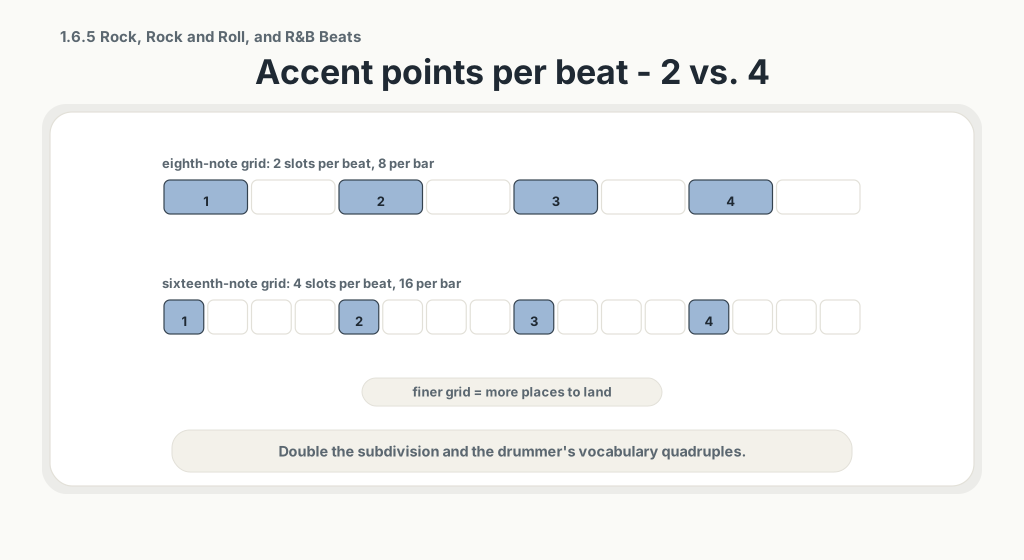
The R&B and funk beat takes the next step: the sixteenth-note subdivision. The hi-hat moves to sixteenth notes - a chattering, fine-grained grid that gives the drummer four possible accent points per beat instead of two. The kick drum pattern becomes syncopated, slipping off the strong beats, dancing around the grid. The snare stays on the backbeat but adds ghost notes - soft, barely-there taps that fill the spaces between the main hits like whispered punctuation. The result is a groove that is intricate, pocketed, and deeply physical. It is the Motown sound, the Stax sound, the Parliament-Funkadelic sound. It is the rhythmic DNA from which hip-hop, in the late 1970s, would build an entirely new genre by sampling and looping these very patterns.
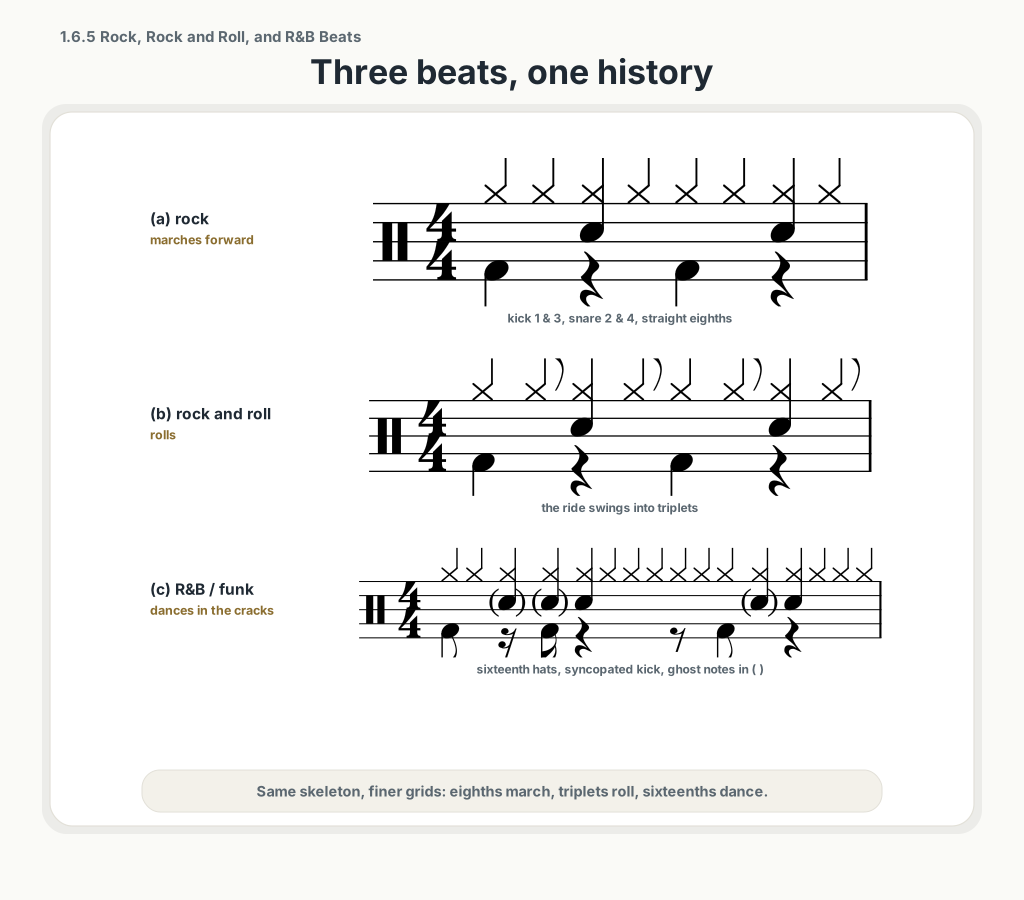
Each of these beats represents not just a rhythmic choice but a cultural moment - a way that a community of musicians decided to organize time, to prioritize certain kinds of physical sensation, to make certain kinds of bodies move in certain kinds of ways. The history of the beat is the history of the body in popular music, and it is still being written.
The Craftsman
“Learn the rock beat first. Play it until it disappears - until you are no longer thinking about it, until it is just the way your body keeps time. Then learn to break it. The breaking only works if the foundation is solid.”
The rhythm is in your hands now. Next: what happens when all these sounds stack up at once.