A locksmith and a safecracker use the same knowledge. Both understand tumblers, pins, tension wrenches, the geometry of a lock’s interior. The difference is intent: one builds security, the other dismantles it. But the deepest understanding belongs to the person who can do both - who knows the lock so well that they can strengthen it and pick it simultaneously.
Altered dominants are the safecrackers of harmony. They take the dominant seventh chord - the most structurally important lock in tonal music - and systematically alter every alterable note, testing how far the mechanism can be stressed before it either snaps into resolution or dissolves into ambiguity. The result is a family of chords that exist at the extreme edge of tonal function: maximally dissonant, maximally directional, and yet - in the hands of a jazz musician - capable of pointing in several directions at once.
Altered dominants take the already-tense dominant seventh chord introduced in Chapter 3.1 (Secondary Dominants) and push it further into chromatic intensity. Rather than settling for the unaltered V7, composers and improvisers introduce alterations - chromatic shifts in the fifth, ninth, and thirteenth - that create even greater tension and demand resolution with almost physical urgency. This is the Authentic Paradigm at its most extreme: the V chord doesn’t merely suggest the I, it demands it with a concentrated force that can only be satisfied by resolution. These alterations expand the expressive palette of harmony and are foundational to jazz, film music, and sophisticated pop styles. The fully altered dominant (V7alt) represents such a dense concentration of chromatic dissonance that it can resolve in multiple directions - a concept we will explore as “functional superposition.”
The Altered Fifth: V7(b5) and V7(#5)
The perfect fifth - normally the most stable interval in a triad - becomes a target for alteration in certain dominant contexts. When the fifth is lowered by a half step, creating a V7(b5), the result is an unstable, anxious quality that feels precarious and unresolved. For example, in the key of C, a G7(b5) contains the notes G, B, D♭, and F. The D♭ replaces the natural D, introducing chromatic tension. Through voice leading convention, this lowered fifth typically resolves downward by half step, echoing the tritone resolution habit we’ve already learned but applied to a different chord member. Conversely, when the fifth is raised by a half step to create V7(#5) - also called the augmented dominant - the harmonic quality becomes mysterious and exotic. A G7(#5) contains G, B, D♯, and F, giving the chord an ambiguous, suspended quality that pulls upward. The raised fifth typically resolves upward by half step, creating a different vector of tension and release than the flattened fifth.
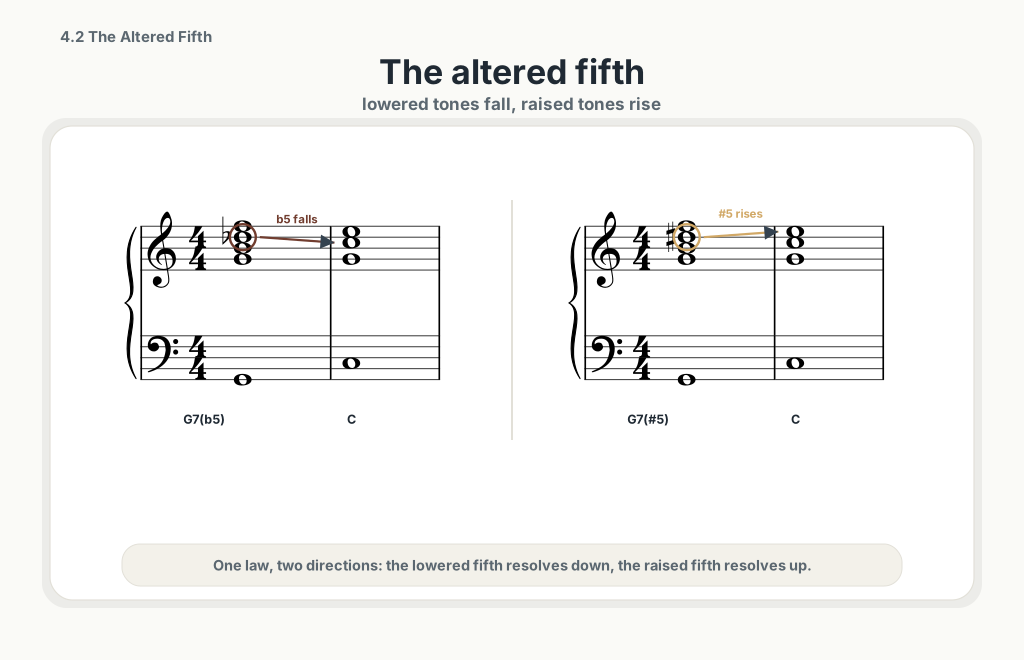
Both altered fifths serve the same fundamental purpose: they inject chromatic voice leading into the dominant function, forcing smoother melodic movement than an unaltered dominant would allow. A soprano line might sit on a chromatic tone that wants to move; a bass might follow a chromatic descent. The fifth - typically the least active note in a dominant seventh - becomes active and expressive.
The Altered Ninth: V7(b9) and V7(#9)
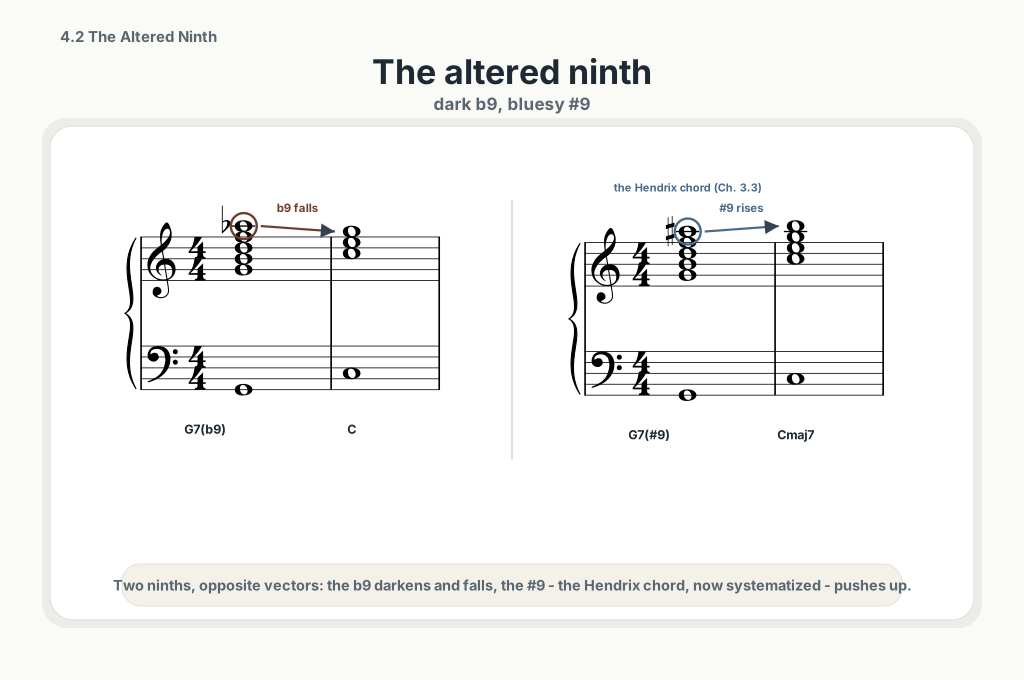
The ninth degree of a dominant seventh chord can be flattened or sharpened to create two of the most emotionally distinct altered dominant colours. A V7(b9) adds a flattened ninth to the standard G7 sonority, so that G7(b9) contains G, B, D, F, and A♭. This dark, dramatic quality is particularly common in minor keys, where the lowered ninth contributes to the overall minor-key atmosphere. Voice leading is direct: the b9 wants to resolve downward by half step, creating a clear chromatic descent that mirrors blues tradition and the darkened emotional landscape it inhabits.
The V7(#9), by contrast, is one of the most iconic altered dominants in twentieth-century music. This chord was introduced in Chapter 3.3 (Extended Chords) as the “Hendrix chord,” where we first encountered it as an unusual harmonic colour. Now we see it as a systematic part of the broader altered dominant family - not a freak chord, but a deliberate harmonic tool with roots in blues and gospel. A G7(#9) contains G, B, D, F, and A♯, creating a bluesy, expressive quality that suggests vocal bent notes and blues scale inflections. The raised ninth typically resolves upward by half step. This chord appears throughout blues-rock, funk, and soul music, and understanding it as a V7alt member rather than an isolated oddity reveals its functional purpose: intensifying the dominant’s pull toward resolution while maintaining a blues vernacular.
The Altered Thirteenth: V7(b13)
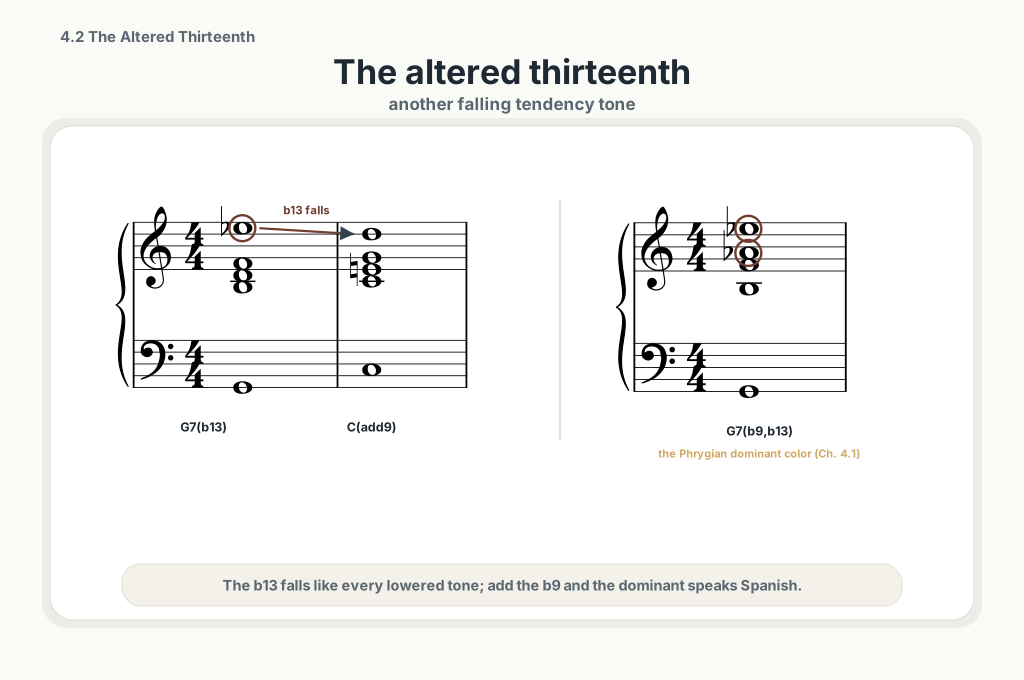
The thirteenth - the upper extension that sits enharmonically with the sixth - can be darkened through a half-step lowering. A V7(b13) adds this flattened thirteenth to the dominant seventh, so G7(b13) contains G, B, D, F, and E♭. This creates a darker colour with a strong pull to resolution; the flattened thirteenth creates another chromatic tendency tone that must fall. The b13 is frequently combined with b9, creating a double-darkened dominant sonority (V7(b9,b13)) that carries particular weight in contexts like flamenco music and Spanish-inflected harmony. This combination is also called a Phrygian dominant - related to the Phrygian dominant scale (the fifth mode of harmonic minor) - and it generates an unmistakable Mediterranean or Eastern flavour.
The Fully Altered Dominant: V7(alt) and Functional Superposition
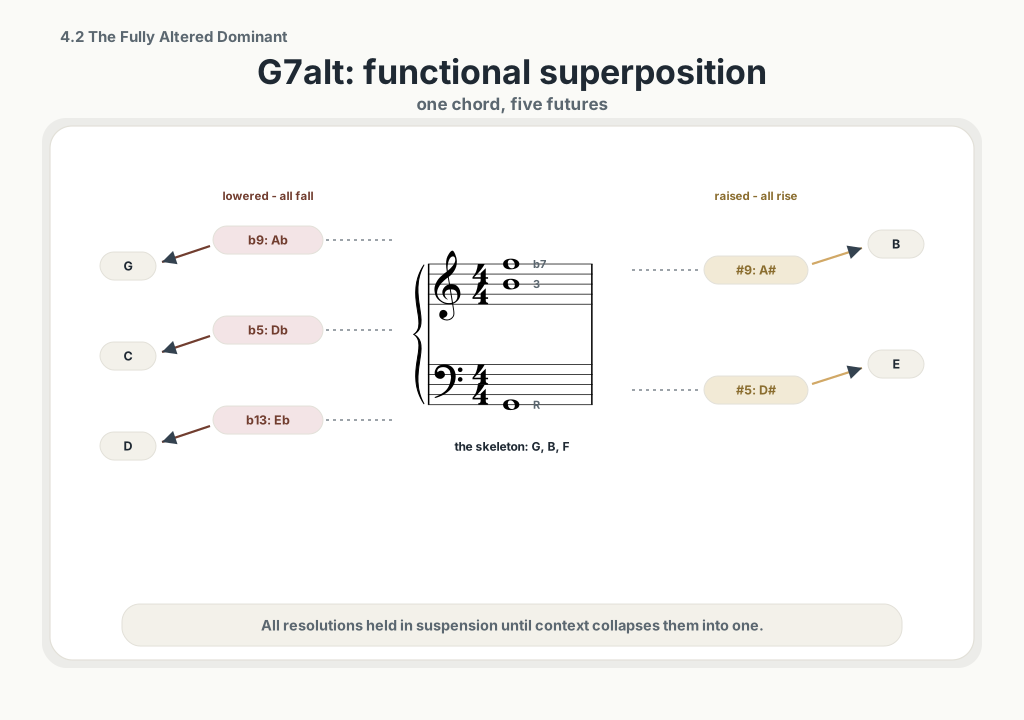
When a dominant seventh chord is altered across multiple chord tones - typically combining b9, ♯9, b5, ♯5, and b13 - the result is called the fully altered dominant, or V7(alt). A G7(alt) might contain G, B, D, F, A♭, A♯, E♭, and D♯. This sonority contains within it a seemingly contradictory wealth of chromatic material: both the ♯9 and the b9; both the ♯5 and the b5; the b13 and (implicitly) the natural 13.
This is where the Quantum Function emerges. A V7alt chord is not a contradiction in music theory - it is a functional superposition. The chord holds in suspension multiple possible resolutions simultaneously. The ♭9 wants to resolve downward; the ♯9 wants to resolve upward. The ♭5 wants to resolve downward; the ♯5 wants to resolve upward. The b13 wants to resolve downward. Until the chord actually resolves - until the context “collapses” the superposition into a specific resolution - the V7alt exists in a state of maximum harmonic possibility. This is graded closure at its most intense: the chord is so densely dissonant, so chromatically saturated, that any resolution feels both necessary and almost inevitable. Different musicians will voice and resolve it differently depending on melody, orchestration, and harmonic context, but all recognize that this chord must resolve.
The Sage
“The altered dominant is the chord that knows too much. It contains the ♭9 and the ♯9 - the minor and the augmented ninth, coexisting. It contains the ♭5 and the ♯5 - two versions of the fifth, pointing in opposite directions. It is a chord in superposition, holding multiple futures simultaneously, refusing to choose until the last possible moment. This is not confusion. This is sophistication.”
Voice Leading Principles and Chromatic Intensity
Effective use of altered dominants depends on understanding how their alterations create tendency tones. The altered extensions and altered intervals all follow the same principle: they introduce chromatic notes that demand half-step resolution. The b9, b5, and b13 typically resolve downward by half step - a natural motion for lowered tones. The ♯5 and ♯9 typically resolve upward by half step - a natural motion for raised tones. The third and seventh of the dominant still maintain their traditional resolutions (the third up to the root of the I chord, the seventh down to the third). What makes altered dominants so powerful is that these voice-leading tendencies stack and interlock, creating multiple chromatic lines all moving toward the tonic simultaneously. A three-note or four-note melody can unfold from a single V7alt chord, with each voice following chromatic logic.
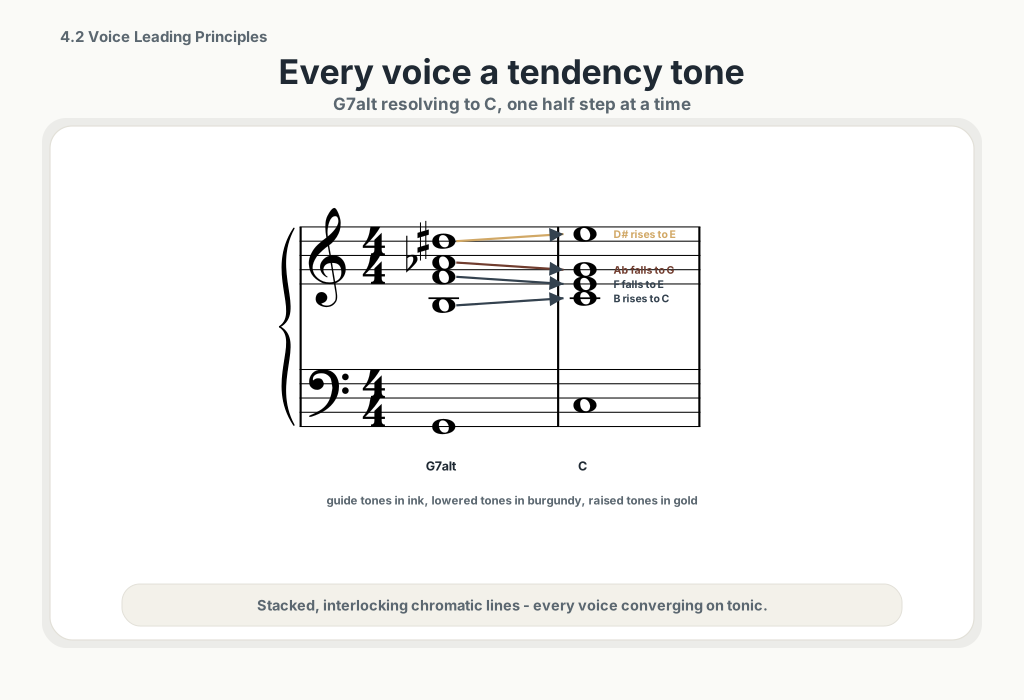
This dense chromatic voice leading connects backward to the blues tradition discussed in Chapter 2.7 (Basic Blues), where bent notes, blue notes, and chromatic slides created expressive dissonance within tonal frameworks. It also connects forward to the conceptual work we’ll do in Chapter 4.3 (Tritone Substitution), where altered dominants and tritone substitutes share a harmonic DNA - the altered scale - that makes understanding one illuminate the other. And it plants seeds for Chapter 4.9 (Omnibus Progressions), where chromatic voice leading from altered dominants becomes the organizing principle of entire passages.
The Craftsman
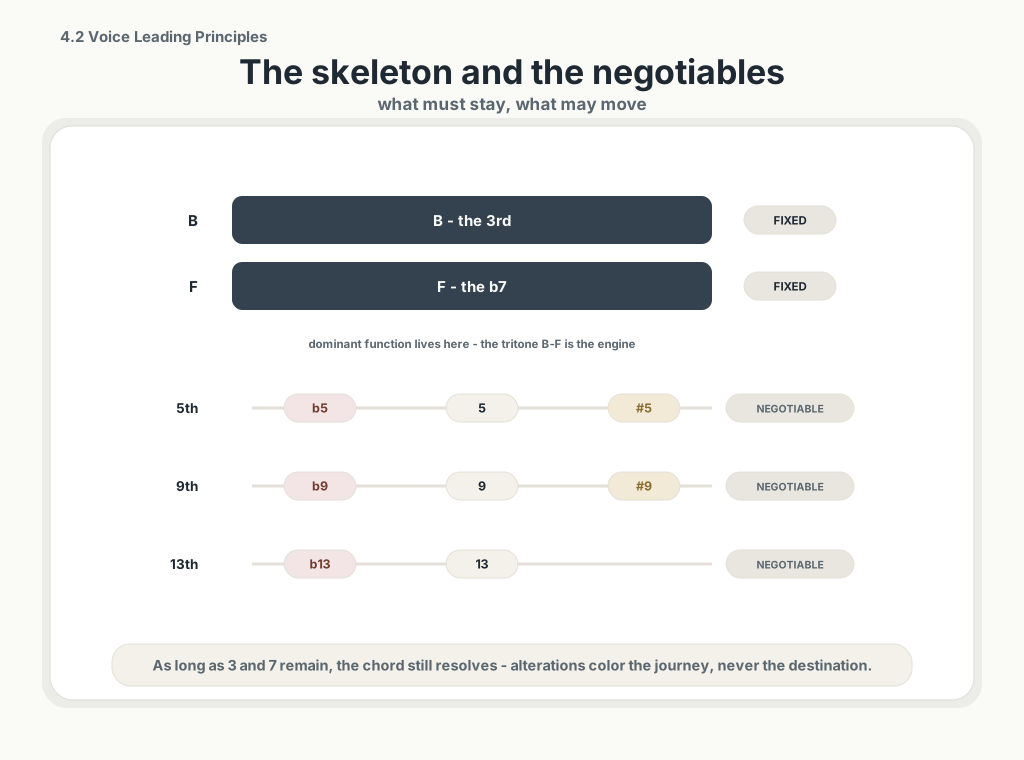
“Altered dominants are simpler than they look. Here is the secret: the third and seventh of the dominant chord never change. They are the skeleton - the bones of dominant function. Everything else - the fifth, the ninth, the thirteenth - is negotiable. Flatten them, sharpen them, do both at once. As long as the third and seventh remain, the chord still wants to resolve. The alterations just change the colour of the journey.”
Jazz and the ii-V-I Progression
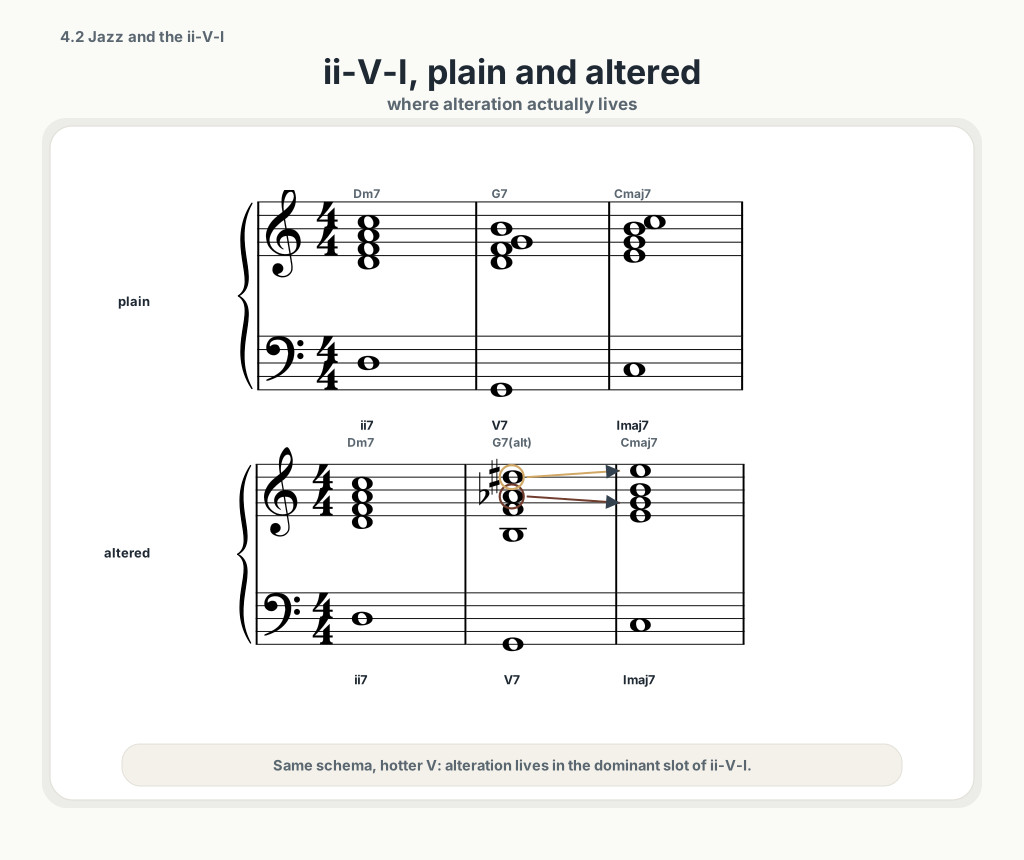
In jazz, altered dominants are foundational to bebop and modern jazz practice. They appear with particular frequency in the ii-V-I progression - one of the most common harmonic templates in jazz standards. A typical example is the progression ii (Dm7) to V (G7alt) to I (Cmaj7) in a tune like Stella by Starlight. The altered dominant here creates harmonic sophistication: instead of a plain G7, the soloist or composer might voice it as G7(♭9), G7(♯9), or the full G7(alt). The abundance of altered dominants in jazz reflects the genre’s deep roots in blues expression (Chapter 2.7) combined with its sophisticated harmonic ambitions. Herbie Hancock’s Maiden Voyage demonstrates altered dominants in a modal context - not resolving to a major tonic but instead floating within a harmonic space where the altered dominant becomes an expressive colour rather than a functionally required resolution.
The Traveller
“I remember the first time I heard a fully altered dominant resolve. It was a recording of Bill Evans playing ‘Nardis.’ The chord before the resolution contained so many altered notes that it barely sounded like a chord at all - more like a cluster of light, bending. And then it landed on the minor tonic, and every note made sense retroactively. It was like watching a flock of starlings that had been swirling in chaos suddenly form a perfect arrow and dive.”
Film and Drama: Altered Dominants as Emotional Intensifiers
Film composers have long exploited altered dominants for their emotional and psychological impact. Because altered dominants create tension and unresolved suspense, they appear frequently in thriller and mystery scores. The master of this technique was Bernard Herrmann, whose film scores for Hitchcock and others made systematic use of altered harmonies to create anxiety, dread, and psychological tension. An altered dominant in a film score signals to the listener: something is wrong, something is unstable, something demands resolution. This is the Authentic Paradigm’s dramatic voice - the V that must resolve to the I, but magnified and intensified through chromatic saturation.
Rock, Pop, and the Blues Vernacular
The altered dominant has appeared throughout rock and pop music, often filtered through blues vernacular and rock instrumentation. Jimi Hendrix’s Purple Haze opens with a V7(♯9) in E - the now-iconic “Hendrix chord” that we encountered in Chapter 3.3. The sharp ninth creates a sound that is simultaneously bluesy and psychedelic, grounded in blues tradition but pushed toward experimental extremes. The Beatles, in “I Want You (She’s So Heavy),” used V7(b9) to create a darker, heavier dominant quality that matches the song’s grinding rhythm and emotional weight. Radiohead’s Exit Music (For a Film) employs V7(♭13) and other alterations within art-rock contexts, showing how altered dominants can serve emotional and textural purposes beyond traditional jazz or blues frameworks. Stevie Ray Vaughan’s blues-rock style relies heavily on V7(♯9) dominants, demonstrating how the altered ninth connects directly to blues expression and how a guitarist can bend and shape these chords to create expressive vocal-like phrasing. D’Angelo’s neo-soul work incorporates altered dominants within R&B and funk contexts, showing how the altered dominant remains vital in contemporary urban music.
Prof. Krankenhorn
“Mr. Hendrix’s contribution to harmony consists, as far as I can determine, of playing a chord incorrectly and then refusing to correct it. That this has been elevated to a theoretical concept - the ‘Hendrix Chord’ - is a testament to the triumph of volume over scholarship.”
The Jester
“Professor, that ‘incorrect’ chord has been played at every blues jam, funk session, and rock concert for sixty years. At what point does a mistake become a tradition?”
Scales and Harmonic Colour
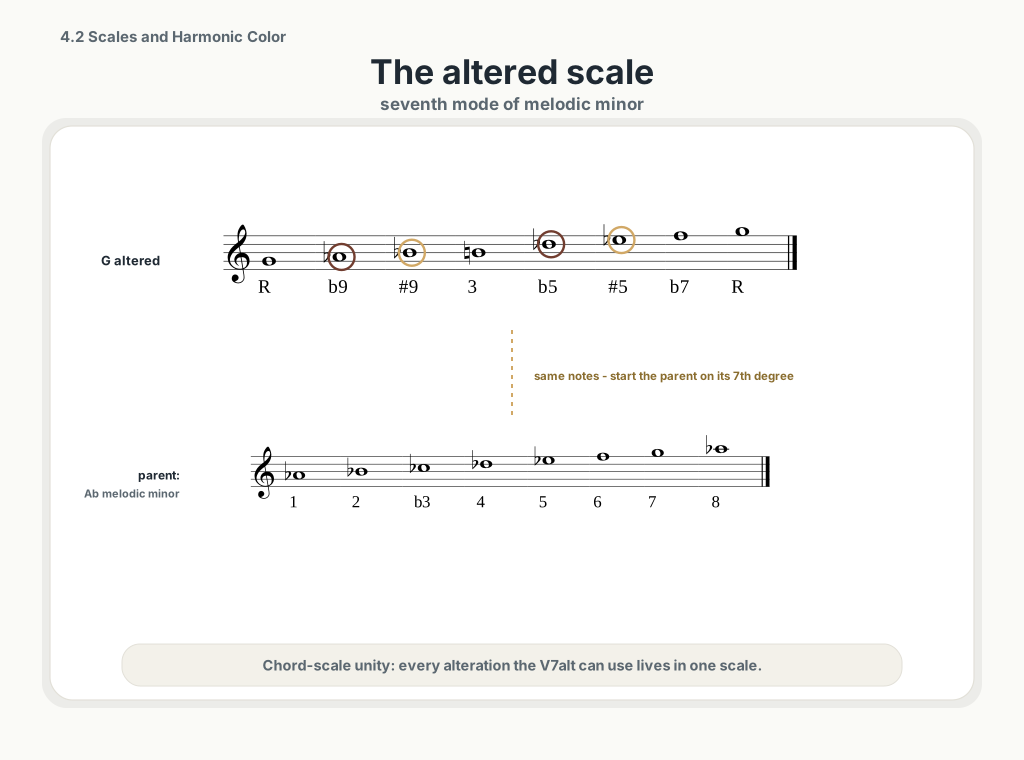
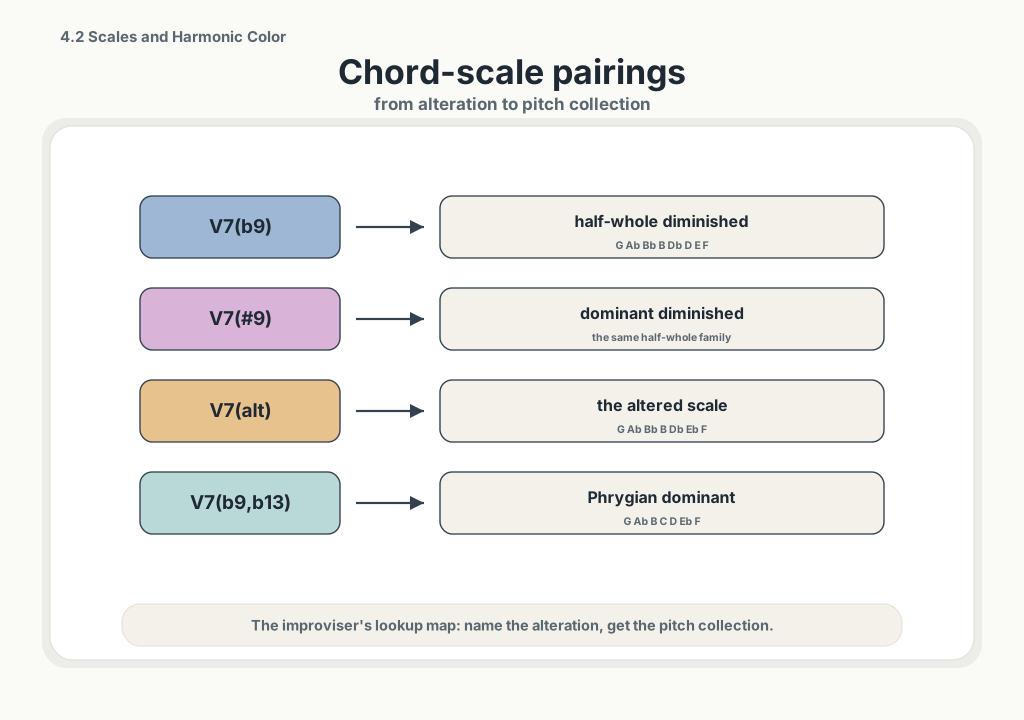
Each altered dominant chord suggests a corresponding scale or mode that reveals its inner harmonic colour. Understanding these scales helps both composers and improvisers navigate the chord and extract its full expressive range. A V7(♭9) pairs naturally with the half-whole diminished scale - a scale alternating half steps and whole steps that contains the dark chromatic density the chord demands. A V7(♯9) suggests the dominant diminished scale (another diminished scale variant), which captures the bluesy sharpness of the raised ninth. The fully altered dominant, V7(alt), draws from the altered scale - the seventh mode of melodic minor - which contains all the chromatic alterations the V7alt could use. The V7(♭13), particularly when combined with a ♭9 in the Phrygian dominant context, suggests the fifth mode of harmonic minor (Phrygian dominant scale proper), which generates that Spanish or Mediterranean flavour through its specific pitch collection. Musicians internalize these scales until chord and scale become inseparable; the V7alt soloist isn’t consciously thinking “altered scale” but inhabits a harmonic world where the altered scale is native.
Closure Thesis: The Authentic Paradigm at Its Extreme
Altered dominants represent the Authentic Paradigm at its most extreme expression. The V-I cadence itself embodies graded closure: the dominant is less closed, less stable, than the tonic, and movement from V to I is movement toward greater stability. When we alter the dominant - when we inject chromatic dissonance into every available space - we are maximizing that instability gap. We are building a harmonic chasm across which resolution must leap. A V7alt is so intensely dissonant that it cannot remain; it must resolve. There is no option, no lingering, no ambiguity. This is closure in its purest, most inevitable form: maximum tension demanding maximum release. The fully altered dominant is music’s way of creating a harmonic no-exit - a place from which the only path is forward to the tonic.
Altered dominants mark the outer boundary of the Authentic Paradigm. Beyond this point, the dominant ceases to function as a dominant - it dissolves into chromaticism, into symmetry, into the Quantum Function’s probabilistic haze. But at this boundary, at the moment of maximum alteration, the dominant is at its most powerful. Every note is a tendency tone. Every interval is a dissonance. The chord is a held breath, a clenched fist, a sentence that cannot end any way other than the way it ends. That is the paradox of alteration: the more you destabilize the dominant, the more inevitably it resolves.