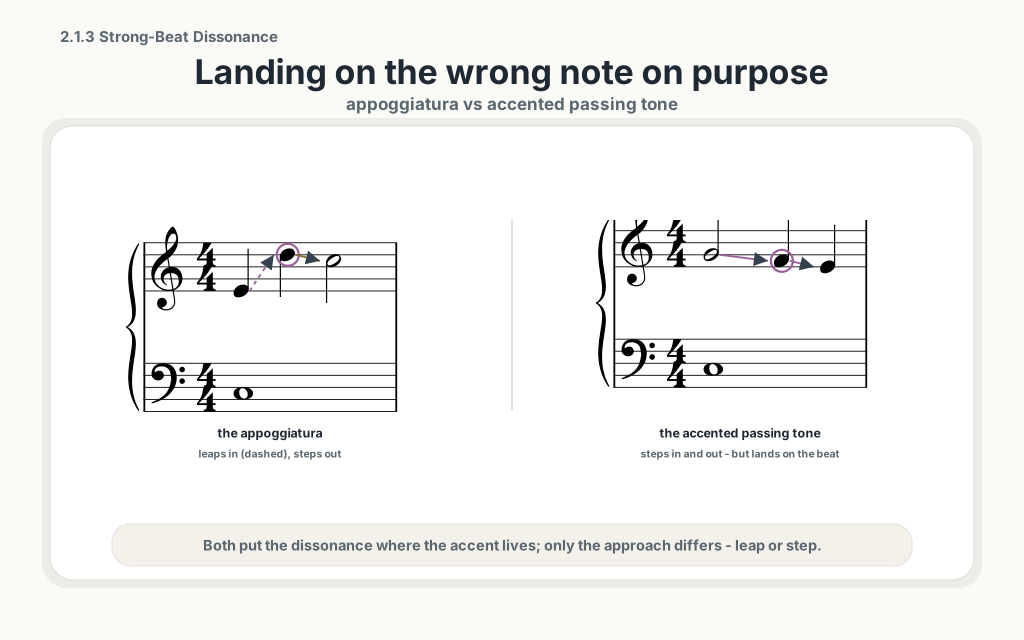
Strong-beat NCTs are often especially audible because of metric emphasis. They may create unusual or dissonant sonorities, but neither quality is universal by definition. They often settle into a more conventional sonority when the NCT resolves; in some cases an NCT occupies a position a chord tone might otherwise fill, as when a fourth replaces a triad’s third.
The main strong-beat NCTs in this chapter are:
- Suspensions, which hold a prepared note over into a new harmony before resolving.
- Appoggiaturas, which arrive expressively on a strong beat and then resolve by step.
- Accented passing tones, which pass between chord tones but do so on a strong beat.
- Accented neighbour tones, which leave and return like ordinary neighbours, but with the dissonance placed in a stronger rhythmic position.
Suspensions
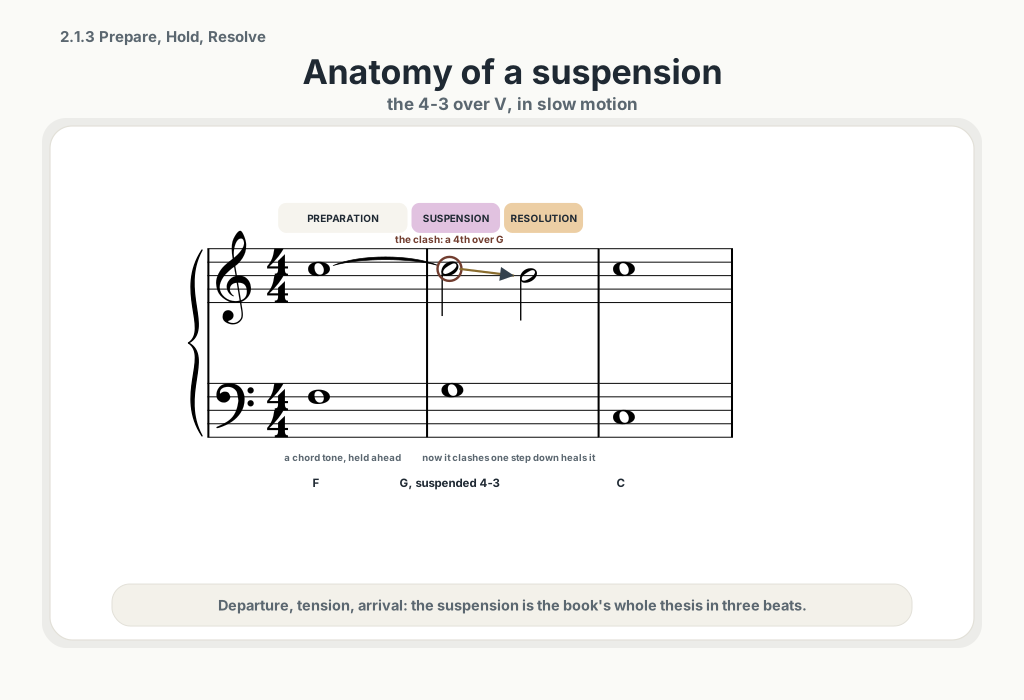
Suspensions are accented dissonances that are prepared as consonances, held over into a new harmony, and then resolved by step. The expressive force of a suspension comes from this delay: the note belongs to the previous harmony, but it leans against the new one until it resolves.
There are three parts to a suspension:
- Preparation - the note begins as a chord tone.
- Suspension - the same note is held over and becomes dissonant against the new harmony.
- Resolution - the dissonance resolves, usually downward by step.
Suspensions are numbered according to the interval above the bass. Suspensions typically resolve down by step except the leading tone, which rises to the tonic, especially in an outer voice - a figure the strict nomenclature calls a retardation, though we will treat it as part of the suspension family.
Appoggiaturas
An appoggiatura is an accented non-chord tone; approached by leap; resolves by step to the note of resolution. Appoggiaturas fall on strong or relatively strong beats and resolve by step onto a weaker beat.
Accented Passing Tones
An accented passing-tone is an accented non-chord tone that acts exactly like a passing-tone except for its placement on a (relatively) strong beat.
Accented Neighbour Tones
An accented neighbour-tone acts exactly like a neighbour-tone except for its placement on a (relatively) strong beat.
Strong-beat NCTs matter because they make dissonance audible as an event. A weak-beat passing tone may slip through the texture; a suspension or appoggiatura leans into the harmony and asks to be heard before it resolves.