3.1.1What is a Secondary Dominant?
Every empire in history has solved the same problem: how do you project power beyond your borders without losing control of the centre? Rome built roads. Britain built railways. The Mongols built relay stations every thirty miles, each one a miniature capital with its own local authority, its own laws - but every one of them answerable to the Khan.
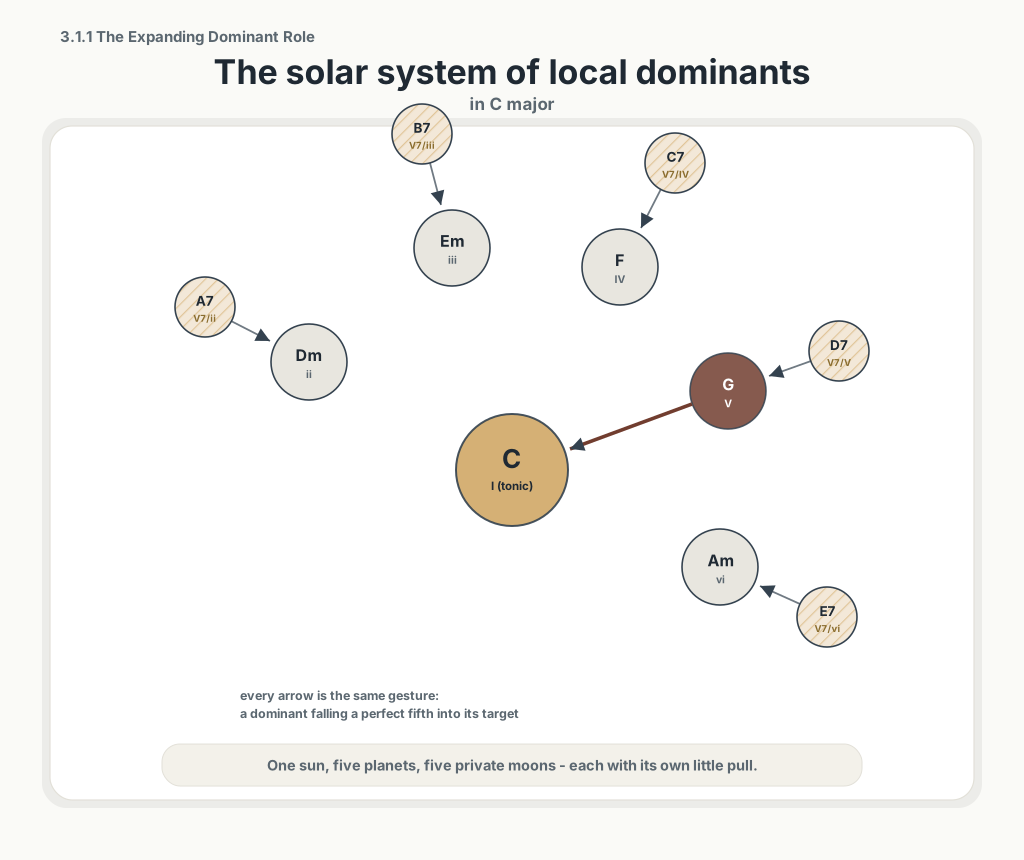
Tonal harmony solved the same problem. The tonic is the capital. The dominant is its most powerful emissary - the chord that ventures furthest from home and still finds its way back. But what if the tonic wants to project that dominant pull across the entire key? What if every chord in the diatonic system could feel, for a moment, like a local capital with its own personal emissary?
That is exactly what secondary dominants do. They briefly tonicize chords other than the main tonic by introducing a temporary V7 → I motion. They create momentary tonal centres and add colour and direction to harmonic progressions.
In Chapter 2.4, we established the Authentic Paradigm - the gravitational pull of V→I that forms one half of tonal music’s dual engine. Secondary dominants are the Authentic Paradigm’s most powerful expansion. They take that same V→I pull and multiply it across the key, allowing every major diatonic chord to feel, for a moment, like a tonic with its own personal dominant. If V→I is the sun pulling a single planet, secondary dominants create an entire solar system of local gravitational fields.
The Sage
“The dominant is not content to serve one master. Give it a commission and it will serve any chord in the key - briefly, brilliantly, and then vanish, like a diplomat who delivers the message and disappears before anyone can ask questions.”
For example, in the key of C major, the ii chord is Dm. We can introduce an A7 chord (the dominant of Dm) right before it. This A7 is called the V7/ii (read as “five of two”). It makes the Dm sound momentarily like a tonic:
C → A7 → Dm → G → C (I → V7/ii → ii → V → I)
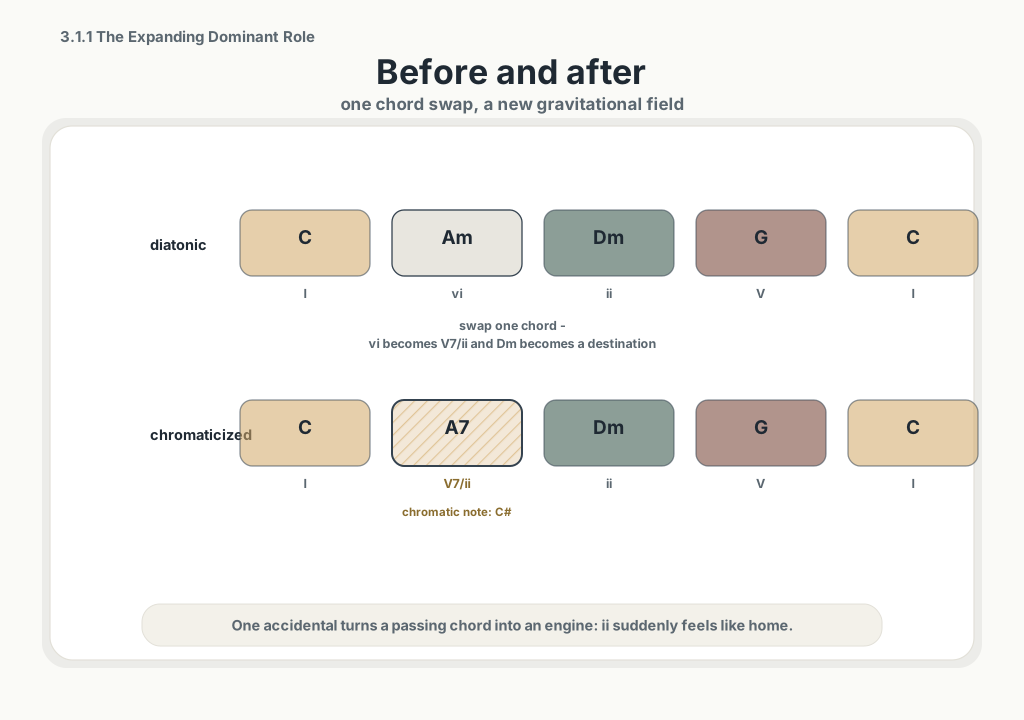
A secondary dominant is always a major or dominant seventh chord that resolves down a perfect fifth to its target chord. Crucially, secondary dominants are not diatonic; they introduce chromatic notes (altered tones not in the key) to create their strong pull.
3.1.2Common Secondary Dominants
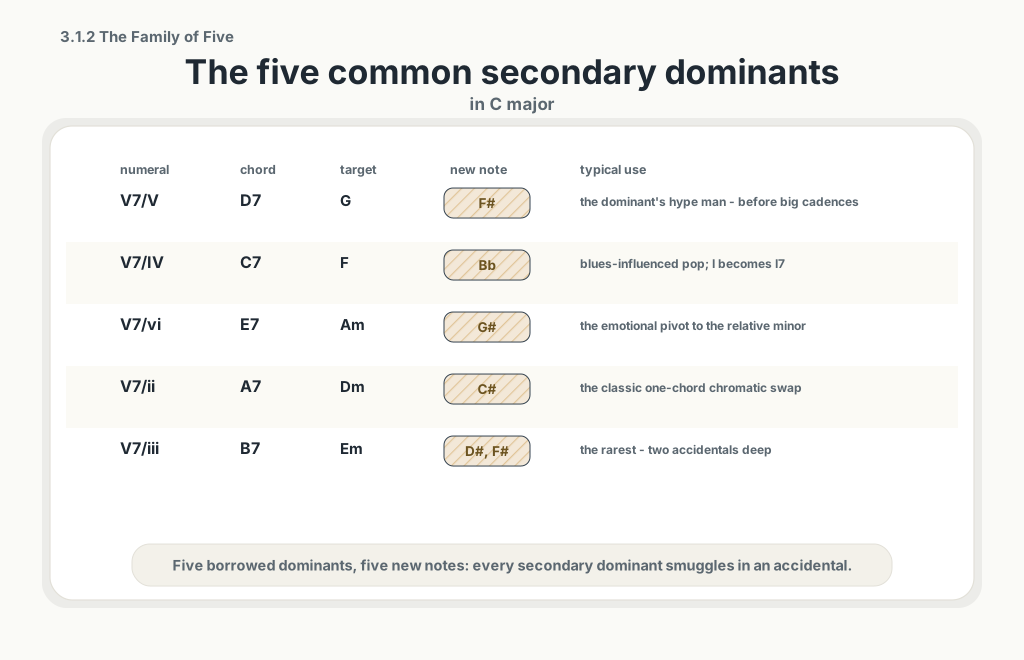
The most frequently used secondary dominants in popular music target the strong diatonic chords of the key. In a major key (like C major), the common targets and their secondary dominants are:
V/V (V of V): D7 resolving to G. This is the most common secondary dominant - the dominant’s own hype man, the chord that arrives early to announce that the V chord is about to make an entrance.
V/IV (V of IV): C7 resolving to F. Very common in blues-influenced pop and rock.
V/vi (V of vi): E7 resolving to Am. This creates a momentary shift to the relative minor, often used for emotional contrast.
V/ii (V of ii): A7 resolving to Dm. This adds complexity to pre-dominant functions, pushing strongly toward the ii chord.
V/iii (V of iii): B7 resolving to Em.
3.1.3Secondary Dominants in Practice
Why do songwriters use secondary dominants? They create forward motion by pulling strongly toward their target chords. They add variety, breaking the predictability of purely diatonic progressions, and they make simple progressions sound richer and more sophisticated.
This intensification operates squarely within the Authentic Paradigm we defined in Chapter 2.4. Secondary dominants always resolve by fifth - they are dominant-tonic syntax, replicated and applied locally. Notice that the Plagal Paradigm (IV→I) has no equivalent mechanism: there is no ‘secondary subdominant.’ The plagal world achieves its closural force through different means - modal colour, metric weight, and the communal pull of the IV chord itself (see Chapters 2.4 and 3.4). The two paradigms operate by fundamentally different grammars.
You will often find secondary dominants placed right before strong cadences (such as a V7/V leading into the V chord), in bridges and pre-choruses to increase tension, or as the pivot mechanism to modulate to new keys entirely.
Consider Yesterday by The Beatles. In the key of F major, the progression moves through an A7 chord to get to Dm. The A7 is the V/vi, pulling us momentarily into the relative minor and creating the song’s signature wistful melancholy.
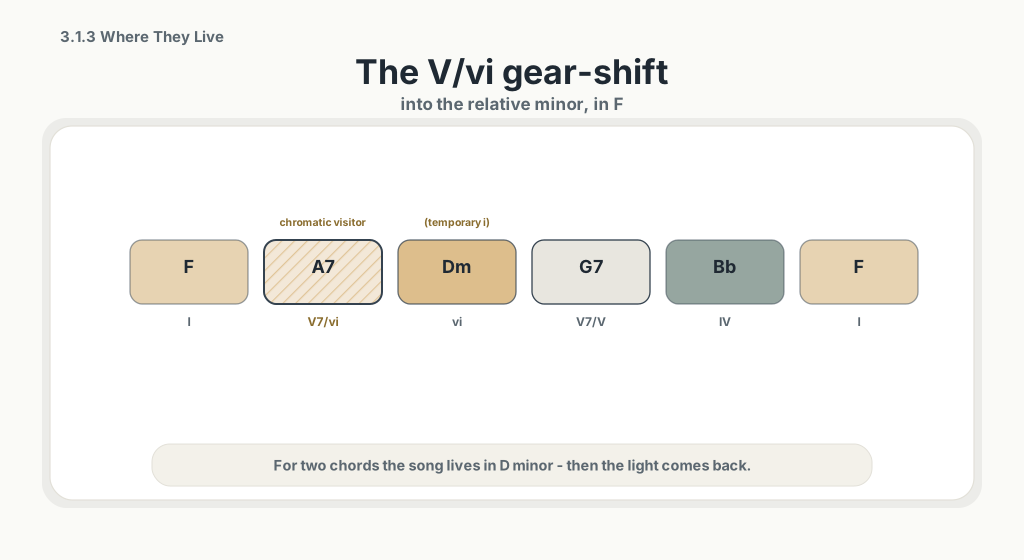
Or listen to God Only Knows by The Beach Boys, a masterpiece of harmonic ambiguity that uses multiple secondary dominants to keep the listener constantly guessing where the true tonic lies.
In I Want to Hold Your Hand by The Beatles, the bridge features a classic V/V progression, driving the energy upward before returning to the main verse.
Secondary dominants are equally at home in R&B and funk. In Mark Ronson and Bruno Mars’s Uptown Funk, the tight horn stabs outline secondary dominant motion that drives the track’s relentless energy. Adele’s Rolling in the Deep uses a V/vi to pivot into the relative minor for its devastating chorus, turning the secondary dominant into an emotional gear-shift. And in Motown, the Temptations’ My Girl deploys a textbook V/IV to warm the transition from verse to chorus - a sound so perfectly calibrated that it became the template for decades of soul songwriting.
Prof. Krankenhorn
“Secondary dominants in funk music. What next - a Schenkerian analysis of a ringtone?”
3.1.4Voice Leading with Secondary Dominants
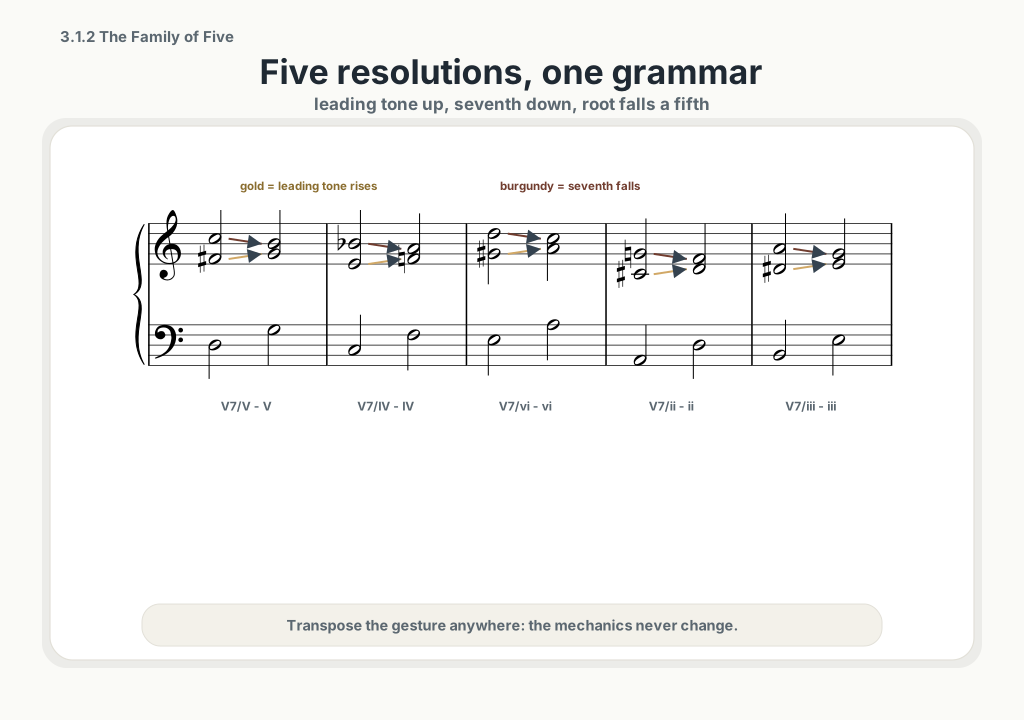
When using secondary dominants, proper voice leading helps create smooth and effective progressions that sound logical rather than jarring. The rules of resolution are the same as for a primary dominant:
The leading tone of the secondary dominant (the third of the chord) should resolve up by half step to the root of the target chord.
The seventh of the secondary dominant should resolve down by step to the third of the target chord.
Common tones between the chords should be maintained in the same voice where possible.
The Craftsman
“Here is the trick: find the chromatic note - the one that does not belong to the key. That note is the engine. It wants to move by half-step in the direction of the alteration. Let it. Everything else follows.”
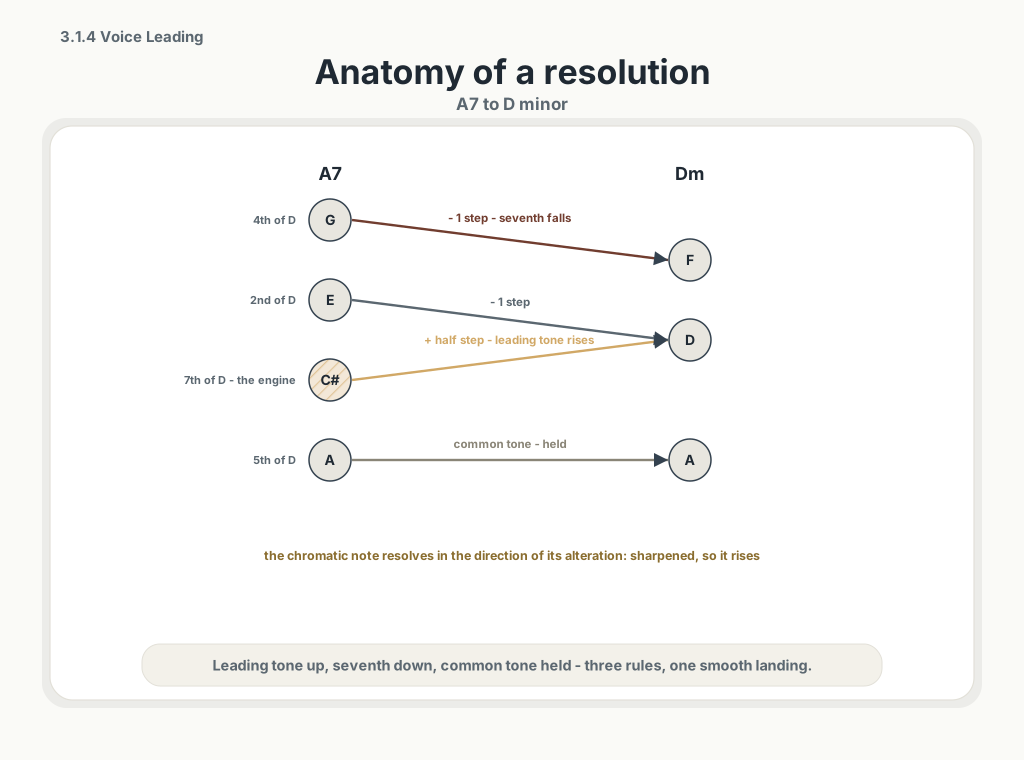
These voice leading principles ensure that the chromaticism introduced by the secondary dominant feels intentional and structurally sound.
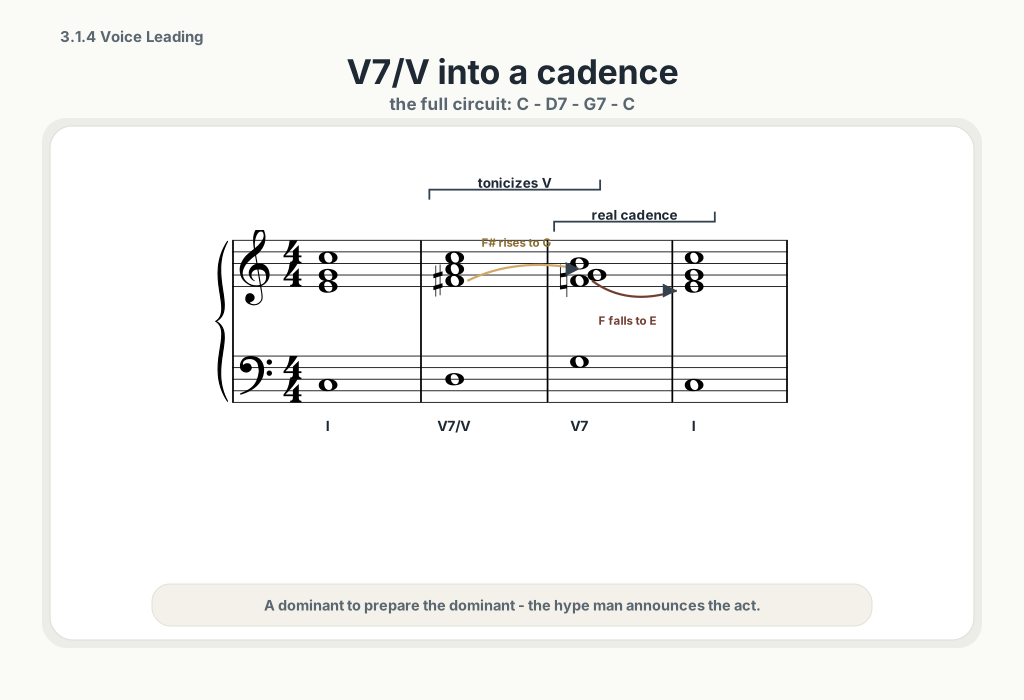
The voice-leading logic of secondary dominants - chromatic alteration resolving by step - will return in intensified form when we encounter diminished seventh chords (Chapter 3.2), where every voice is a tendency tone demanding resolution. It will return again in altered dominants (Chapter 4.2), where the extensions themselves are chromaticized for even greater pull. And it will become a mechanism for modulation itself (Chapter 4.5), where a secondary dominant that refuses to return home becomes the pivot into a new key.
Secondary dominants are, in the end, a vote of confidence in the power of the fifth. They say: this relationship - this pull downward by five - is so fundamental, so structurally persuasive, that it deserves to be replicated everywhere. It is the grammar of the Authentic Paradigm, and it is magnificent. But it is not the only grammar. The Plagal Paradigm, as we shall see, has its own ways of projecting power - quieter, broader, and no less convincing.